Bring container herbs indoors without the pests
Use the forecast, a careful inspection, a lower-light transition, and a quarantine shelf to move only the healthiest plants inside.
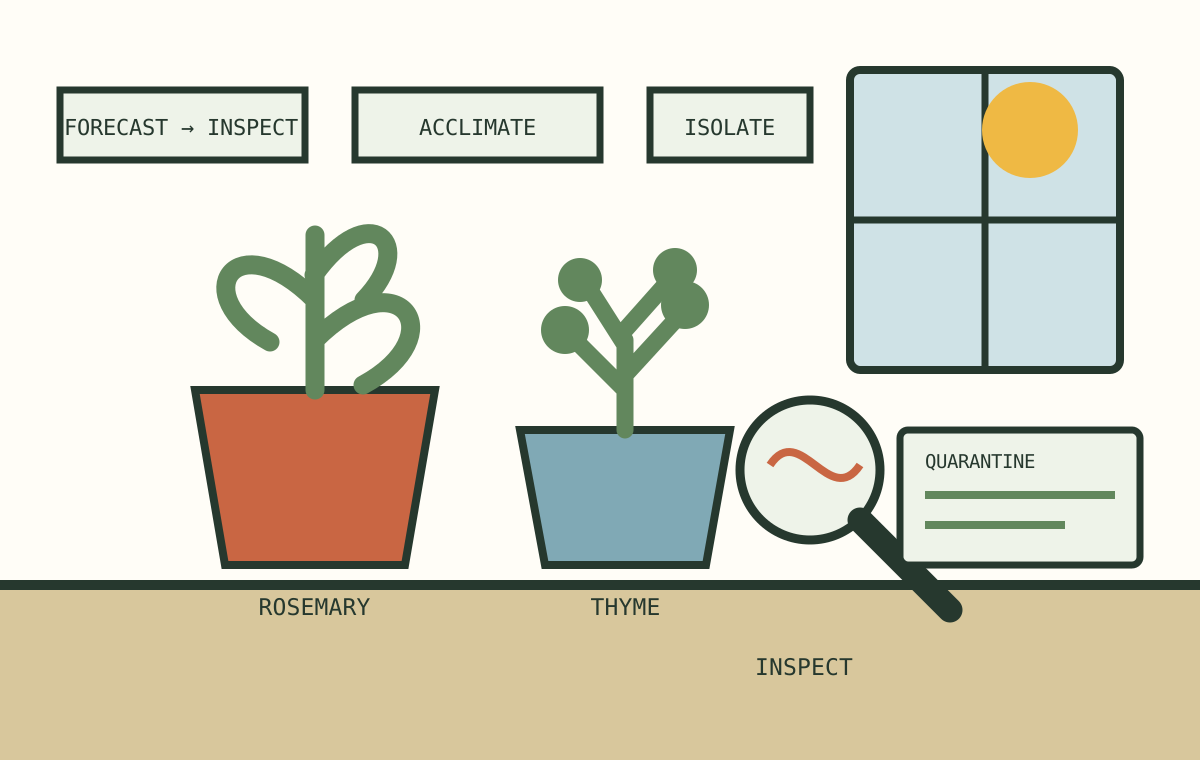
Bringing every patio pot indoors on the night of a freeze is a good way to import pests and overwhelm a small window. A better plan begins earlier, while overnight temperatures are still workable. You choose the plants worth the space, inspect them where light is good, transition them toward indoor conditions, and give them a separate observation period before they join established houseplants.
This is especially useful for renters, balcony gardeners, and small-space homesteaders. Saving two healthy herbs that you cook with is a successful project. You do not need to preserve the entire summer garden.
First, decide what has earned indoor space
Indoor light, clear shelf area, and attention are limited. Rank each container on four questions:
- Do you use it? A modest pot of thyme used every week is more valuable than a large novelty herb no one harvests.
- Is it healthy? Severe pest pressure, disease, root problems, or major decline can make disposal the lower-risk option.
- Can your home provide the conditions? Note the brightest safe window, drafts, heat vents, humidity, and room for isolation.
- Is the plant a good candidate? Illinois Extension lists container-suitable herbs such as rosemary, oregano, marjoram, thyme, chives, parsley, sage, mint, and summer savory, while reminding gardeners to acclimatize plants in early fall.
Annual basil may be easier to replace with a clean cutting or a new indoor sowing than to move a tired outdoor plant. Rosemary can be worthwhile but responds poorly to the combination of low light, warm dry air, and excessive watering. Treat each herb as a separate decision rather than moving the whole group by habit.
Make a two-week transition calendar
| When | Task | What you are looking for |
|---|---|---|
| 10–14 days before | Choose plants and begin reducing light gradually | Enough forecast margin to avoid cold damage |
| 7–10 days before | Inspect leaves, stems, soil surface, pot rim, drainage holes, and saucer | Insects, eggs, webbing, sticky residue, holes, discoloration, disease |
| 5–7 days before | Clean the plant and pot using a method suitable for that plant | Fewer hitchhikers; no new damage |
| Move day | Place in a separate indoor observation area | A stable location with appropriate light and no contact with established plants |
| Weeks 1–4 indoors | Reinspect during watering and adjust care | Pests, leaf drop, slow drying, light stress, new growth |
Penn State Extension recommends gradually reducing light for about one to two weeks when possible. That reduces the shock of moving from outdoor sun to indoor light. Its current guidance also notes that plants can take one to two months to adjust; some yellowing or leaf drop during that period can reflect the environmental change rather than an immediate need for more water or fertilizer.
Inspect six places, in this order
Work outdoors or in an easy-to-clean area. Use bright light and, if helpful, a hand lens.
- New growth: look for clusters of aphids, distortion, or sticky honeydew.
- Leaf undersides: look for insects, eggs, fine webbing, stippling, and scale.
- Stem joints: check protected crevices where mealybugs or scale may hide.
- Soil surface: watch for adult fungus gnats and excess moisture.
- Pot edges and drainage holes: inspect rims, cracks, labels, feet, and saucers.
- The plant as a whole: separate normal old leaves from unusual spotting, dieback, or disease.
University of Minnesota Extension advises inspecting the tops and undersides of leaves, containers, rims, crevices, and pot bottoms. It also recommends isolation when pests are detected. Sticky cards can help monitor some flying insects, but they do not replace close inspection or solve the cause of a problem.
Clean conservatively and follow labels
Remove dead or badly damaged leaves and old debris from the soil surface. Clean the exterior of the container and saucer. A firm rinse can dislodge many insects from sturdy foliage; support stems and avoid damaging tender growth. Allow the container to drain before it moves inside.
Do not apply a pesticide “just in case” without identifying the problem and reading the label. If treatment is needed, use only a product labeled for that pest, plant, location, and use. Follow every direction and precaution. Some products suitable outdoors are not labeled for indoor use. Extension guidance or a local diagnostic service can help identify an uncertain pest or disease.
Advice about soaking pots or soil is not universal. It can waterlog plants that require drier conditions and may not suit every container or pest. Use a method recommended for the specific plant and situation rather than turning one technique into a rule.
Create a quarantine shelf that actually separates
Penn State suggests isolating returning plants for three to four weeks before placing them near established indoor plants. University of Minnesota describes one to two weeks for newly acquired or returning plants as a monitoring period. The practical choice is to use the longer period when space permits or when the plant has a questionable history.
Isolation means more than putting the new pot on the far end of a crowded windowsill. Use a different room or a clearly separated area when possible. Do not share saucers, watering tools, pruning tools, or fallen leaves between groups without cleaning. Check plants during each watering because moisture often makes small insects easier to notice.
Reset light, water, and fertilizer indoors
Light
Put herbs in the brightest suitable location available, based on their needs. Illinois Extension notes that herbs commonly need six to eight hours of bright light and that supplemental lights may need to run longer than the equivalent natural-light period. A timer makes the schedule consistent. Keep foliage from touching cold glass, and rotate pots only if that helps even growth without disturbing a plant that dislikes being moved.
Water
Indoor pots usually dry more slowly because light is lower, air movement is reduced, and growth slows. Check the potting mix rather than continuing the outdoor calendar. Water thoroughly when appropriate for the herb and allow drainage; do not leave a pot standing in water unless the plant-specific method calls for it.
Fungus gnats favor moist organic media. If they appear, correct chronically wet conditions while considering the herb’s needs. A dry soil surface does not prove the root ball is dry, so learn the weight of the pot and check below the surface.
Fertilizer
Do not try to force growth immediately after the move. Penn State notes fertilizer is generally unnecessary during the adjustment period when plants are not actively growing. Resume only when the plant is established and growing, following an appropriate product label and Extension guidance.
Keep a one-card plant record
A useful record fits on an index card or phone note:
- plant name and variety, if known;
- date brought indoors and last outdoor low temperature;
- inspection findings and any labeled treatment used;
- quarantine location and planned end date;
- indoor light location or timer schedule;
- watering observations, not a rigid interval;
- pests, leaf drop, harvest, and new growth.
That record turns winter into a small experiment. In spring you will know which herbs survived, which window worked, and which plants did not justify the space. Pair it with the site’s start-where-you-live audit to plan around your actual light and time, and use the first compost guide for healthy, untreated plant debris that is appropriate for your compost system.
A weekend version for one windowsill
- Choose two healthy herbs you use regularly.
- Check the ten-day forecast and identify the move window.
- Photograph and inspect every plant surface and the pot.
- Remove debris, clean the container, and address identified problems using plant- and pest-specific guidance.
- Move the pots through a gradual lower-light transition if weather permits.
- Set up a separate observation shelf with adequate light and drainage protection.
- Write the move date and a three- to four-week review date.
The point is not to make an indoor greenhouse overnight. It is to carry one useful growing skill through winter without creating a pest problem for the rest of the home.
Sources
Reviewed September 27, 2026. Local climate and plant-specific guidance should shape the final plan.
- Penn State Extension — Before the First Frost: Bringing Your Plants Indoors for Winter.
- University of Minnesota Extension — Bringing Houseplants in for Winter.
- University of Minnesota Extension — Managing Insects on Indoor Plants.
- Illinois Extension — Growing Herbs in Containers.
- Illinois Extension — Keep Growing with Herbs Indoors This Fall and Winter.